Cruise guide
Vancouver Cruise Passenger Growth: A Record Season and Its Economic Impact
3 min read · Published October 17, 2026
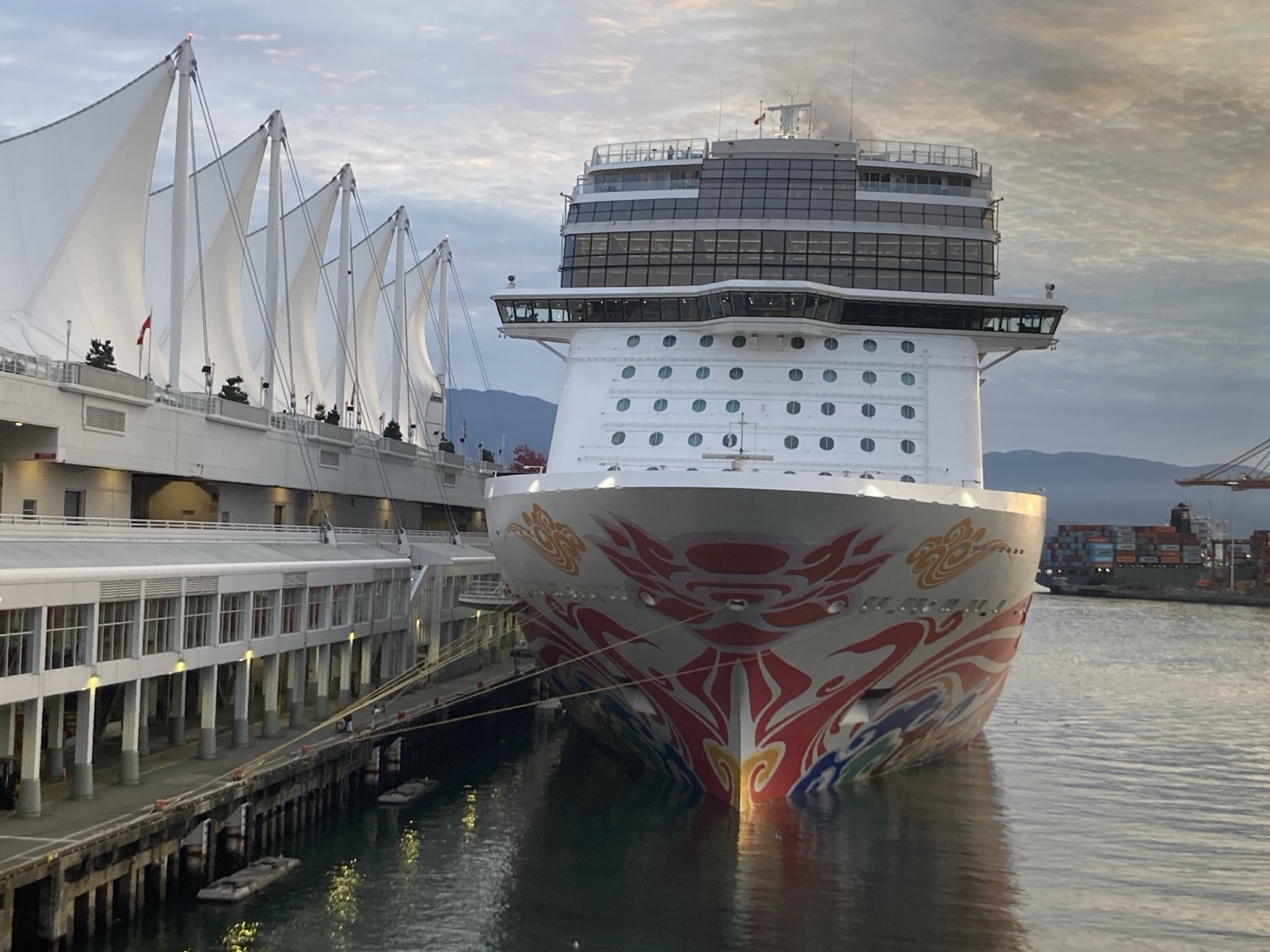
Vancouver welcomed nearly 1.4 million cruise passenger visits in 2026, marking its busiest cruise season on record. Beyond the ships lining up at Canada Place, that activity brought spending to hotels, restaurants, shops, transport providers and local suppliers.
The Vancouver Fraser Port Authority estimates that the 2026 season generated more than CAD 1 billion in local economic activity. Looking back over the past decade shows how far the city’s cruise business has grown—and why its role as an Alaska cruise homeport matters to the wider economy.
How Has Vancouver’s Cruise Traffic Changed?
Vancouver’s cruise passenger traffic increased from approximately 805,400 visits in 2015 to 1.07 million in 2019. Operations then paused for two years during the pandemic.
Cruising returned in 2022, and passenger traffic surpassed its pre-pandemic level in 2023. Another record followed in 2024, before a quieter 2025 and a new high in 2026.
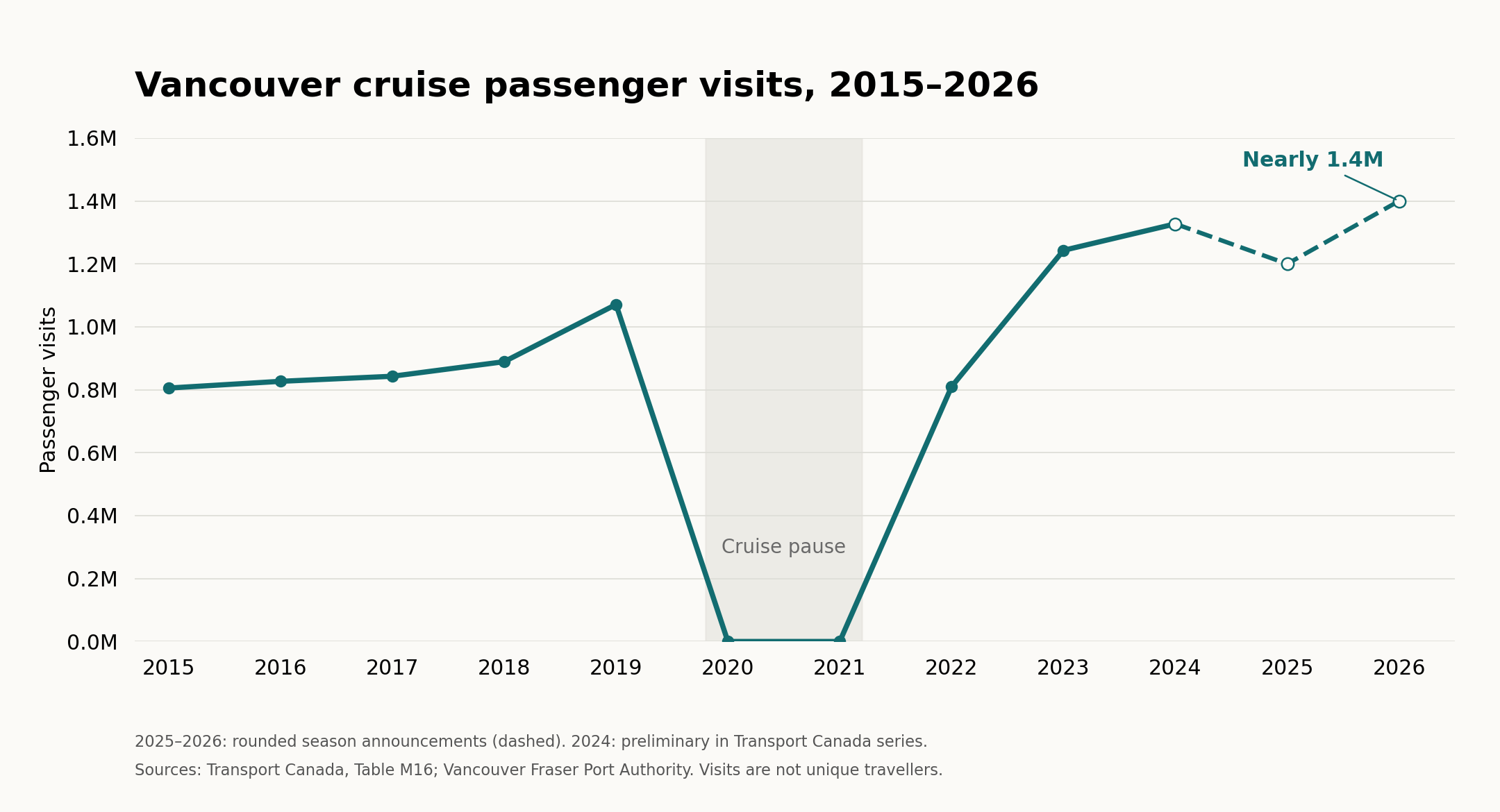
Figures for 2015–2024 are converted from Transport Canada’s series, reported in thousands; its 2024 figure is labelled preliminary. Figures for 2025 and 2026 are rounded port-authority season announcements.
Using approximately 1.4 million for 2026, passenger traffic was roughly 31% higher than in 2019 and 74% higher than in 2015.
These numbers measure passenger visits, rather than individual travellers or Vancouver residents who take cruises. They include embarkation, disembarkation and transit visits. A passenger starting and ending a round-trip cruise in Vancouver can therefore be counted twice.
Why Being a Homeport Matters
Vancouver is a starting and finishing point for Alaska cruises. Passengers may spend time in the city before boarding or after disembarking, extending their trip beyond the cruise itself.
The port authority reported 358 cruise ship calls in 2026 and says more than 76% of cruise passengers spent time in Vancouver before or after their cruise. That creates business for accommodation providers, restaurants, attractions, shops and transport services. Cruise lines also purchase goods and services to support their operations.
How Much Economic Activity Does Cruising Generate?
A study commissioned by Cruise Lines International Association and prepared by Tourism Economics provides a detailed breakdown of Vancouver’s cruise activity in 2024.
Published in 2026, the report estimates that passenger, crew and cruise line spending generated CAD 802 million in direct spending. Including indirect and induced effects, Vancouver’s cruise activity supported approximately CAD 1.4 billion in economic output across British Columbia.
| Measure | 2024 estimate |
|---|---|
| Passenger and crew spending | CAD 351 million |
| Cruise line spending | CAD 451 million |
| Total direct spending | CAD 802 million |
| Total economic output including indirect and induced effects | Approximately CAD 1.4 billion |
| GDP contribution | CAD 738 million |
| Jobs supported | 8068 |
| Wages supported | CAD 499 million |
These estimates measure the effects of Vancouver’s cruise activity on British Columbia’s economy in 2024. Spending components form part of the totals and should not be added together again. cruising.org
Direct spending includes purchases by passengers, crew and cruise lines. Indirect effects arise when businesses buy from suppliers, while induced effects reflect employees spending their earnings.
Economic output and GDP also measure different things. Output captures business activity throughout the supply chain; GDP measures the value added. Neither represents government revenue or cruise company profit.
The study’s 2024 provincial results and the port authority’s 2026 local estimate cover different years and scopes. They should therefore be treated as separate measures, rather than evidence that economic impact increased or decreased between those years.
What Does This Mean for Cruise Travellers?
Vancouver’s growth is a reason to plan the time ashore as carefully as the cruise itself. When comparing Alaska sailings, include accommodation, airport transfers and sightseeing in your total budget—not just the cruise fare.
Arriving before departure also creates an opportunity to explore Vancouver. Rather than treating the city only as a boarding point, consider whether an extra night would add value to your trip.
Sources
- Transport Canada — Cruise Ship Traffic, 2015–2024 https://tdih-cdit.tc.canada.ca/en/addendum-tables/2024/table-m16-cruise-ship-traffic-selected-canadian-ports-2015-2024-0?utm_source=chatgpt.com · accessed 2026-10-17
- Vancouver Fraser Port Authority — 2025 Cruise https://rss.globenewswire.com/news-release/2025/10/20/3169502/0/en/Strong-cruise-season-delivers-billion-dollar-lift-to-Vancouver-s-economy-in-2025.html?utm_source=chatgpt.com · accessed 2026-10-17
- Vancouver Fraser Port Authority — Official Updates https://ca.linkedin.com/company/vancouver-fraser-port-authority?utm_source=chatgpt.com · accessed 2026-10-17
- CLIA / Tourism Economics — Cruise Port Profile https://cruising.org/sites/default/files/2026-08/CLIA%20Cruise%20Port%20Profile%20Vancouver_Final%20Report%20-%20Public.pdf?utm_source=chatgpt.com · accessed 2026-10-17